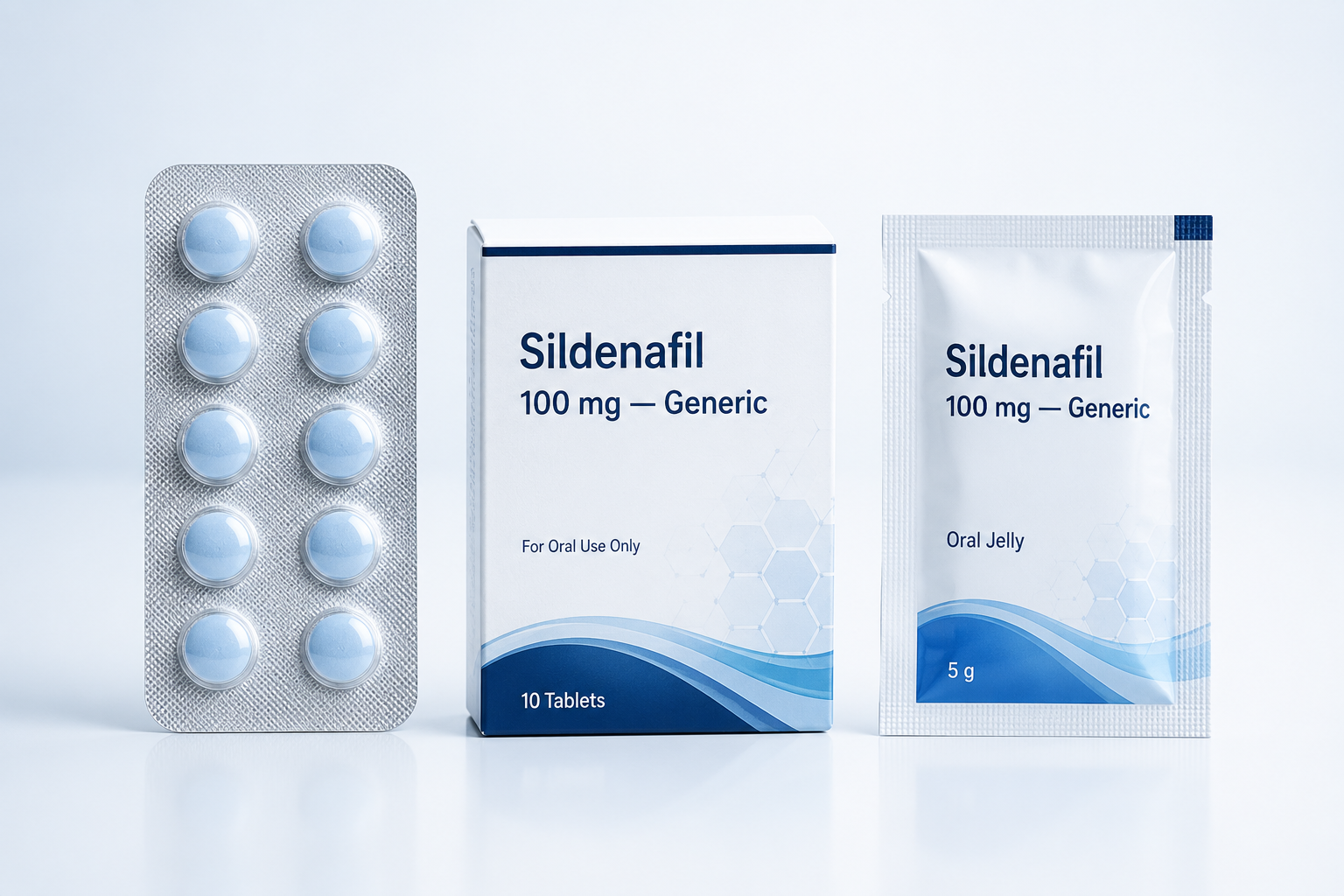
Selecting a sildenafil brand depends on several neutral, clinically relevant factors: the form (tablets, soft tabs, oral jelly), strength, manufacturer, and verified GMP standards. Although all legitimate products contain sildenafil citrate, brands differ in dosage stability, batch consistency, packaging integrity, and long‑term manufacturing reliability. These variations influence predictability of onset, duration, and overall user experience without implying commercial superiority.
When comparing branded and generic options, attention should remain on quality controls, documented production standards, and transparent manufacturer practices. Indian pharmaceutical companies produce a wide range of GMP‑compliant sildenafil formulations, which you can explore in the neutral overview of Indian Brands. This page provides structured, non‑commercial criteria to help evaluate form factors, strengths, stability, and reputation across manufacturers.
Choosing a sildenafil brand involves clinically relevant, non‑commercial factors such as the manufacturer, available forms, and the dosage range offered. Although all legitimate products contain sildenafil citrate, brands differ in production standards, formulation consistency, and long‑term reliability. These variations influence predictability of onset, duration, and overall tolerability without implying superiority of any specific manufacturer. Understanding these distinctions helps users navigate a diverse market where generics may vary in excipients, dissolution profiles, and batch stability.
Verified GMP compliance and stable dosage performance are essential for ensuring consistent therapeutic effect. Differences between tablets, soft tabs, and oral jelly also matter, as each form has unique onset characteristics and convenience profiles. Evaluating these neutral clinical factors allows users to select a brand that aligns with their preferred administration method, sensitivity level, and lifestyle needs. For guidance on safe online sourcing, see Online Safety. Reliable sourcing is especially important because brand variability can influence user experience even when the active ingredient remains identical.
In practice, brand selection becomes part of a broader decision-making process that includes manufacturing reputation, formulation quality, and user-specific preferences such as flavor, chewability, or ease of swallowing. These elements contribute to overall satisfaction and adherence, making brand choice a meaningful component of responsible sildenafil use.
Evaluating sildenafil brands requires a structured, neutral approach focused on manufacturing quality, formulation stability, and clinical usability. GMP certification ensures that production follows standardized quality controls, reducing variability between batches. Dosage stability is equally important, supporting predictable onset and duration across repeated use.
Forms such as tablets, Soft Tabs, and Oral Jelly differ in absorption speed and convenience, making form selection a practical factor rather than a commercial one. Strength ranges (25–200 mg) allow flexibility for different clinical scenarios, while manufacturer reputation reflects adherence to quality standards rather than brand promotion. The table below summarizes the core criteria.
| Criterion | Why It Matters | Notes |
|---|---|---|
| GMP | Quality control | Stable dosage |
| Dosage stability | Predictable effect | Batch consistency |
| Forms | Onset & convenience | Tablets, Soft Tabs, Jelly |
| Strengths | Clinical flexibility | 25–200 mg |
| Manufacturer | Reputation | Indian vs US/EU |
Sildenafil forms differ in onset characteristics, convenience, and sensitivity to food intake. Tablets offer the most traditional profile, with onset influenced by meal timing and gastric absorption. Soft Tabs dissolve sublingually, often providing a faster onset and reduced sensitivity to food. Oral Jelly is designed for ease of swallowing and may offer quicker absorption due to its semi‑liquid formulation.
These differences do not imply superiority; they simply reflect varying clinical preferences. Users who prioritize rapid onset may prefer Soft Tabs, while those seeking convenience may choose Oral Jelly. Tablets remain the most widely used form due to familiarity and broad availability. For detailed pharmacokinetic context, see Onset & Duration and Food Interactions.
Sildenafil brands offer a wide range of strengths to accommodate different clinical needs and user sensitivities. Lower doses such as 25 mg are typically used in situations requiring minimal exposure, while 50 mg represents the standard baseline strength. Higher doses, including 100 mg, 150 mg, and 200 mg, exist for users requiring stronger therapeutic effect, though availability varies across manufacturers.
These differences reflect formulation strategies rather than commercial positioning. Some brands focus on standard strengths, while others provide extended ranges to support broader clinical flexibility. Neutral evaluation of strength options helps users understand how dosage affects onset, duration, and tolerability. More details on specific strengths are available at 50 mg, 100 mg, and 200 mg.
| Strength | Typical Use | Notes |
|---|---|---|
| 25 mg | Low‑dose | Sensitive users |
| 50 mg | Standard | Baseline dose |
| 100 mg | High‑dose | Strong effect |
| 150 mg | Intermediate high | Limited brands |
| 200 mg | Very high | Few brands |
Manufacturer reputation plays a central role in evaluating sildenafil brands, especially when comparing large pharmaceutical factories across India, the US, and the EU. Differences arise from production scale, formulation expertise, quality‑control systems, and long‑term consistency in maintaining stable dosage performance. Neutral assessment focuses on how reliably a manufacturer adheres to standardized processes rather than on commercial positioning.
Verified GMP compliance remains the most important indicator of manufacturing quality. GMP‑certified factories follow strict protocols for raw material handling, blending, granulation, coating, and packaging, ensuring that each batch meets predefined specifications. This is why Indian manufacturers dominate the global sildenafil market: many operate large‑scale GMP facilities with extensive export experience and established regulatory oversight. Their production capacity allows consistent output across multiple strengths and forms.
Major Indian factories produce tablets, soft tabs, and oral jelly under standardized conditions, offering predictable performance without implying superiority of any specific brand. A neutral overview of these manufacturers is available on the Indian Brands page.
Packaging quality is a critical factor in evaluating sildenafil brands because it directly affects dosage stability and long‑term product integrity. Properly sealed blisters protect tablets, soft tabs, and oral jelly from moisture, oxidation, and physical damage. Any compromise in blister integrity can influence dissolution behavior and reduce predictability of onset.
Each pack should display a clear batch number and expiry date, allowing verification of production timing and ensuring the product remains within its stability window. Batch numbers also help confirm consistency across manufacturing cycles, supporting neutral evaluation of brand reliability. Users should inspect foil quality, sealing uniformity, and print clarity as part of basic safety checks.
These packaging factors do not indicate commercial value but reflect adherence to standardized pharmaceutical practices. For guidance on safe sourcing and authenticity checks, visit Online Safety.
Price differences between sildenafil brands do not necessarily reflect variations in clinical quality. Many lower‑priced products come from large GMP‑certified factories with efficient production lines, allowing them to offer competitive pricing without compromising dosage stability or manufacturing standards. Higher prices may reflect branding, packaging style, or distribution channels rather than pharmacological differences.
Form and strength also influence pricing. Soft tabs and oral jelly often require additional formulation steps, while higher strengths (100–200 mg) may cost more due to increased active ingredient content. These factors contribute to neutral, predictable price variation across manufacturers.
Understanding the relationship between production standards, formulation type, and dosage range helps users evaluate brands without relying on commercial cues. A detailed breakdown of pricing influences is available on the Price Factors page.
Neutral comparison of sildenafil brands focuses on manufacturer reliability, available forms, dosage ranges, and adherence to GMP standards. These factors influence consistency, onset predictability, and overall user experience without implying commercial superiority. Indian manufacturers dominate many categories due to large-scale GMP-certified production, while established global companies maintain strong reputations through long-term regulatory compliance.
Forms such as tablets, soft tabs, chewables, and oral jelly reflect formulation diversity rather than quality differences. Dosage ranges vary by brand, with some offering extended strengths up to 200 mg. GMP compliance ensures stable dosage performance across batches, making it a key criterion in neutral brand evaluation. For more details on jelly formulations, see Kamagra Oral Jelly, and for comparative analysis of branded vs generic options, visit Fildena vs Viagra.
| Brand | Manufacturer | Forms | Strengths | Notes |
|---|---|---|---|---|
| Cenforce | Centurion Labs | Tablets, Soft Tabs | 25–200 mg | Large export brand |
| Fildena | Fortune Healthcare | Tablets, Chewable | 25–150 mg | Wide form variety |
| Kamagra | Ajanta Pharma | Tablets, Oral Jelly | 50–100 mg | Popular jelly form |
| Suhagra | Cipla | Tablets | 25–100 mg | High reputation |
Evaluating a sildenafil brand requires a neutral, structured approach centered on manufacturing quality, packaging integrity, and formulation characteristics. Verified GMP compliance is the primary indicator of reliable production, ensuring that each batch meets standardized specifications for blending, coating, and dosage uniformity. Users should confirm GMP status through manufacturer documentation or regulatory listings.
Packaging inspection is equally important. Blister integrity, foil quality, print clarity, batch number, and expiry date all contribute to dosage stability and product authenticity. Forms and strengths should be selected based on clinical preferences rather than brand marketing—tablets, soft tabs, and oral jelly each offer different onset profiles and convenience factors.
Neutral brand evaluation focuses on safety, consistency, and suitability rather than commercial claims. For additional safety considerations, review Contraindications, which outlines clinical factors relevant to sildenafil use.